
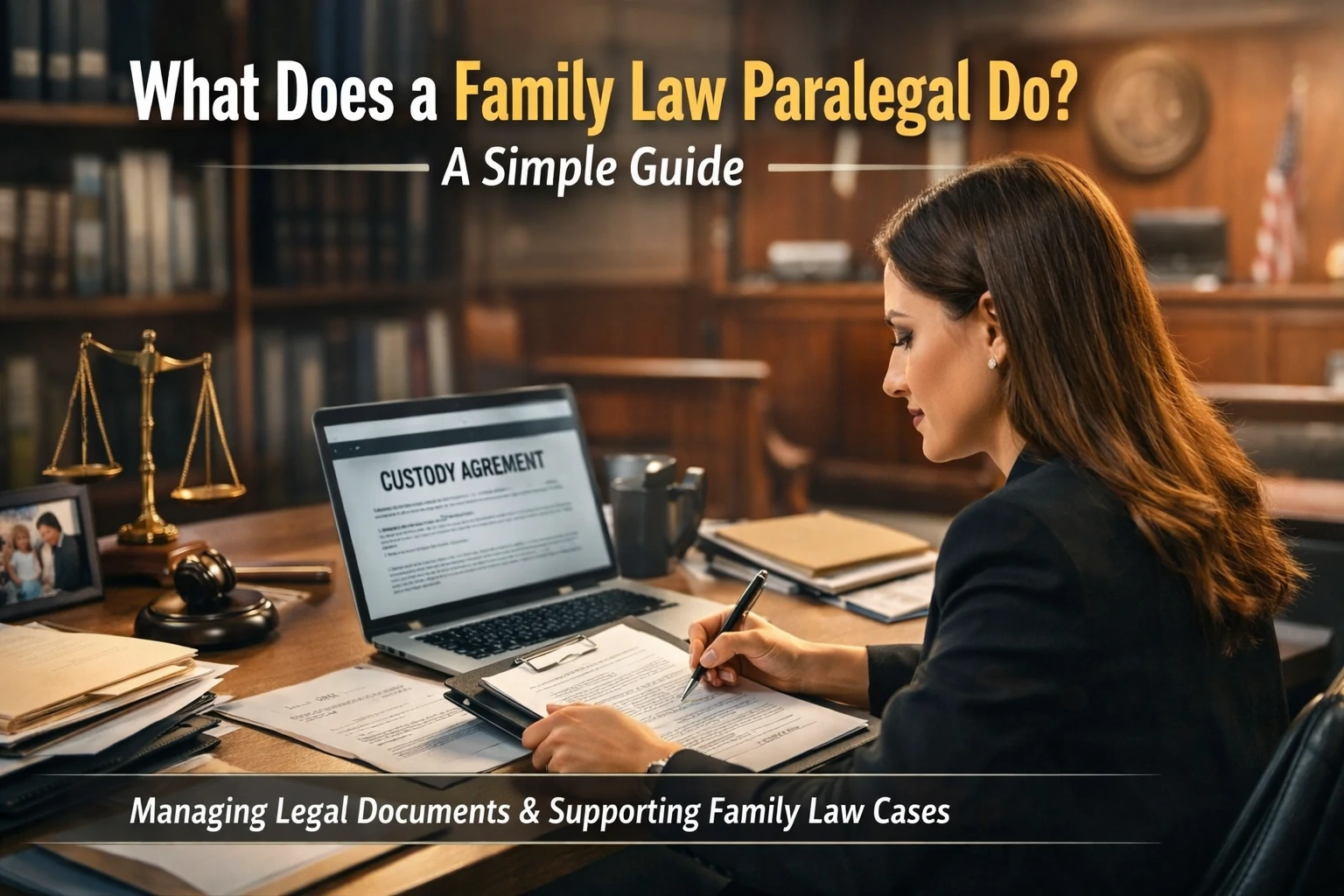
Family law handles real problems like divorce, custody, and support. These cases follow strict rules and often feel stressful. A lawyer leads the case, but they rely on support to manage details.
A family law paralegal handles that support. They prepare documents, manage files, and guide clients. Their work keeps cases organized and on track.
Many people think paralegals only file papers. In reality, they handle key tasks and deal with sensitive situations. They help bring clarity during difficult times.
What Is a Family Law Paralegal?
A family law paralegal supports a licensed lawyer. They assist with cases about divorce, custody, support, and adoption. They cannot give legal advice. Only attorneys can do that. But they prepare documents and collect facts the lawyer needs to build a case.
Their work affects real families and private matters. One small error can delay court or weaken the case. They must focus and check each detail. Their accuracy helps protect the client’s rights.
Paralegals also speak with clients often. They answer calls, explain paperwork, and help with schedules. They guide clients step by step. Their voice brings calm in a stressful time.
What Does a Family Law Paralegal Do Each Day?
Each day brings new tasks. A family law paralegal handles both paperwork and people. Some days focus on forms and research. Other days bring client calls, meeting prep, or court filings.
Here are some daily tasks:
- Draft legal documents
- File motions and court papers
- Gather bank records and financial info
- Organize evidence and witness notes
- Set court dates and manage calendars
- Help lawyers prepare for trial
- Contact courts and other law offices
- Update clients and answer questions
Each task needs full focus. One wrong date or name can cause serious trouble. Paralegals must stay sharp and ready. They juggle many jobs at once, meet strict deadlines, and solve problems fast.
Paralegals vs. Legal Assistants
Some people mix up these two roles. Both help lawyers, but their tasks differ.
Legal assistants focus on office work. They file papers, answer phones, and set appointments. Paralegals handle more legal tasks. They prepare forms, talk with clients, and help build the case.
In short, legal assistants manage the office. Paralegals manage the legal work. Both roles matter, but paralegals dig deeper into case law and court prep.
Skills Every Family Law Paralegal Needs
Family law demands more than legal knowledge. Clients feel pain, fear, or stress. A strong paralegal listens with care. They explain things in plain English. They help clients feel safe.
Key skills include:
- Strong reading and writing
- Clear speech and listening
- Focus on detail
- Privacy and respect
- Time management
- Steady mindset under pressure
- Kindness and patience
- Knowledge of family law
Some of these skills come from training. Others come from real-life work. Many paralegals grow stronger through experience.
How To Become a Family Law Paralegal
Most paralegals start with a degree or certificate. Some programs offer family law classes. These teach court rules, legal terms, and common forms.
Common steps include:
- Finish high school or earn a GED
- Complete a paralegal studies program
- Take family law courses
- Apply for internships
- Gain work experience at law firms
Some states ask for certification. Others do not. Many law offices prefer certified paralegals. Groups like NALA and NFPA offer tests and national credentials.
Most new paralegals start in general law. Many move into family law later if they enjoy working with people and want a more hands-on role.
Want real insight before choosing a lawyer? Read our full Brown Family Law Reviews to see what clients really think.
Why Family Law Is Unique
Family law deals with people, not just papers. It shapes the future of parents and children. Each case comes with emotions. Clients need legal help and human support.
Paralegals in this field must show care and calm. They speak with people who feel lost or scared. They explain each form and answer each question. Their words can ease fear and build trust.
Their work changes lives. A single form can decide where a child will live. One letter can protect a parent’s rights. That is what makes this job so important.
How Paralegals Help Lawyers and Clients
Lawyers lead in court. Paralegals lead in the background. They handle records, track deadlines, and prepare the case. Their work gives lawyers time to focus on legal arguments.
Clients also lean on paralegals. They ask questions and share concerns. The paralegal listens and responds with care. This helps the client stay calm and informed.
When lawyers and paralegals work well together, cases move smoothly. Clients feel supported. Mistakes happen less. Teamwork builds trust and brings better outcomes.
Where Do Family Law Paralegals Work?
Most paralegals work at law firms. Some firms handle only family law. Others cover many areas. Some paralegals work in legal aid groups. These help people with low income. Others work in courts or government offices.
Many paralegals work full-time. Some work part-time or take freelance roles. Some even work from home with digital forms and files.
No matter where they work, their role stays key. They help the legal system run and help families move through hard times with dignity.
The Future of This Career
The need for family law paralegals grows each year. More people face divorce, custody fights, or support issues. Lawyers need help to handle the load.
New tools shape the job. Software helps file forms and store records. But machines cannot replace human care. Clients need real people who listen and guide them.
A good paralegal blends skill and heart. They keep cases on track and clients at ease. They turn a hard process into a clear path forward.
Conclusion
A family law paralegal plays a major role in every case. They draft forms, gather facts, and talk to clients. Their work helps lawyers stay ready and clients stay calm.
This job calls for focus, skill, and care. Each task may shape a family’s future. Paralegals offer quiet strength in a busy legal world.
If you want a legal career with purpose, this path offers real value. If you need legal help, your paralegal may become your strongest guide. They make sure nothing gets missed and every voice gets heard.
Disclaimer
This article shares general legal information, not legal advice. Always consult a licensed attorney for help with your specific case.