

Morning light still hits the front porches at Todd Creek Farms the same way it always has. Lawns stay trimmed. Mailboxes line the streets in neat rows. From the curb, nothing looks out of place.
Yet many homeowners no longer see the neighborhood the way they once did. Small problems piled up. Bills climbed higher. Repairs stalled. Questions met silence. Over time, quiet frustration turned into formal complaints. Those complaints eventually became a lawsuit that reshaped how residents viewed their HOA and each other.
When everyday issues stopped feeling small
Todd Creek Farms relies on a homeowners association to run shared spaces and manage money collected from every household. Dues cover landscaping, road care, drainage systems, and community upkeep.
Trouble began when residents noticed a growing gap between what they paid and what they received.
- Sidewalk cracks remained open for months.
- Water pooled in low areas after storms.
- Grass trimming fell behind schedule.
At the same time, HOA fees rose more than once within a short span.
People asked why.
Some raised concerns at meetings. Others emailed board members. A few requested copies of budgets and expense reports.
Responses often came late or not at all. When records did appear, they lacked clear detail. Large payments showed up without clear purpose. Contractor work appeared unfinished despite full charges.
What once felt like normal neighborhood management now felt uncertain and uncomfortable.
How money and power became the center of the fight

The legal complaint focused on how the HOA board handled community funds and decision-making authority.
Homeowners argued that board members failed to meet their legal duty to act in the community’s best interest. Court documents pointed to spending without proper approval, unclear vendor agreements, and maintenance projects that never matched the money spent on them.
Several residents also raised concerns about uneven treatment. Some homeowners received quick warnings for small rule violations. Others seemed untouched by the same rules.
There were also claims that major financial choices happened without homeowner votes or clear notice.
The case entered Colorado state court, where HOA disputes commonly land under civil property and contract law. Judges in these cases examine budgets, meeting minutes, board conduct, and whether legal responsibilities were followed.
Who Brought the Lawsuit and When It Began
Several homeowners from Todd Creek Farms joined together to file the lawsuit against the HOA board.
Most of them had lived in the community for years. They had paid dues regularly and attended meetings before problems grew.
Court records show the case began after months of failed communication between residents and the board. Requests for clear budgets and repair updates came first. Legal action followed only after those efforts failed.
The lawsuit moved forward as a civil case in Colorado, where homeowner association disputes fall under property and contract rules.
Residents stated the goal was not conflict. They wanted accountability, proper records, and fair treatment across the community.
Life inside the neighborhood once lawyers stepped in
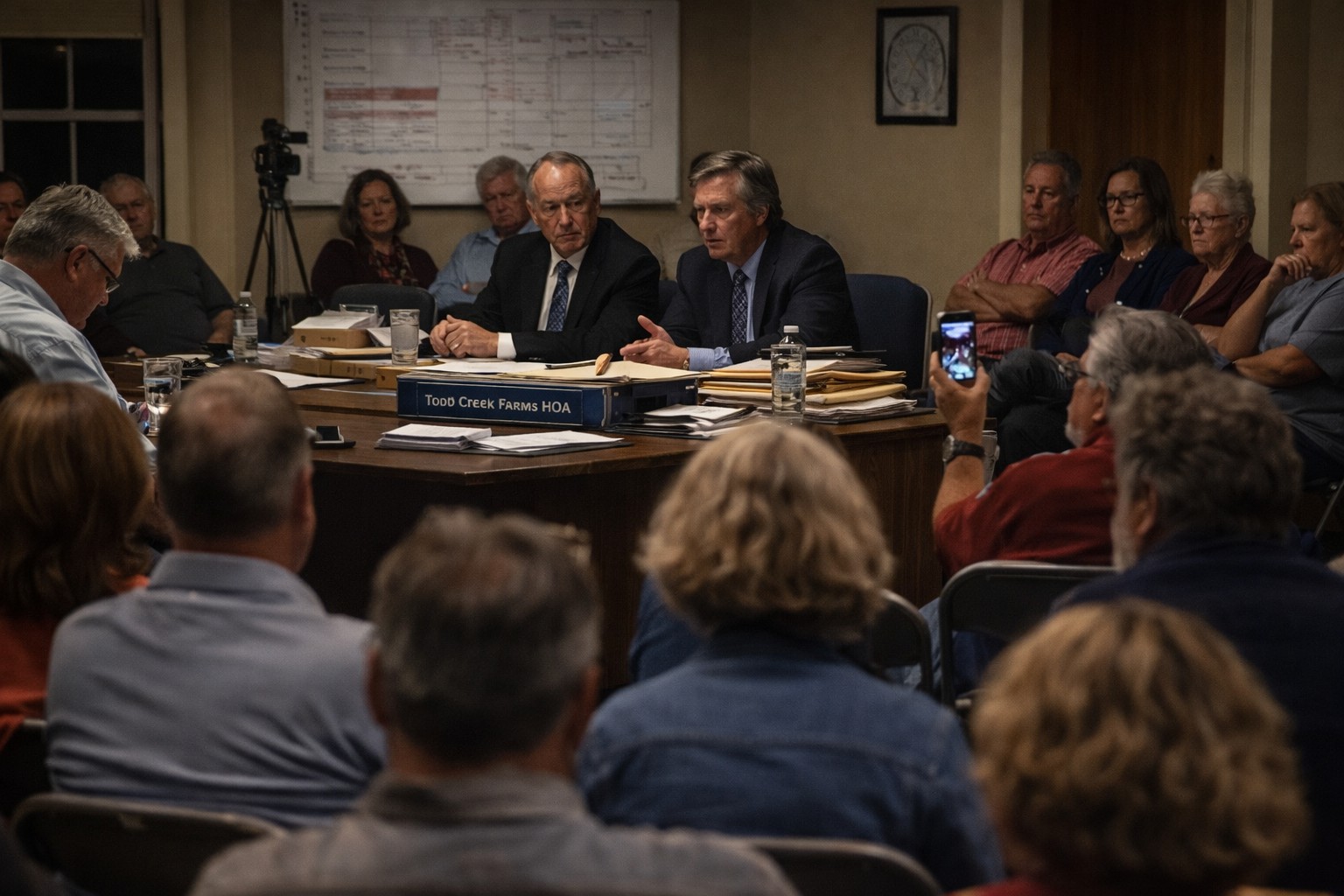
The lawsuit changed the tone of the entire community.
Meetings that once lasted an hour now stretched late into the evening. Conversations grew sharper. Longtime neighbors sat on opposite sides of the room. Some residents began recording sessions to protect themselves. Others stopped attending altogether because stress replaced cooperation.
Community money shifted toward legal bills. Projects slowed. Repair schedules slipped even further. Special assessments appeared to keep up with court costs.
What Courts Often Order in HOA Disputes Like This
HOA lawsuits rarely end with simple apologies. Courts usually step in with firm instructions when wrongdoing appears.
Financial Reviews and Audits
Judges often require full audits of HOA accounts.
These audits track where money went and whether spending followed community rules.
In many Colorado HOA cases, audits exposed hidden fees and poor record keeping.
Board Policy Changes
Courts may order HOAs to rewrite budget rules, voting procedures, and document access policies.
This helps prevent future abuse of authority.
Leadership Restructures
Some disputes end with board resignations or new elections.
Residents regain control through fresh leadership that must follow clearer standards.
Even residents who supported the HOA felt the strain. Even residents pushing for reform paid a financial price. HOA lawsuits rarely stay limited to paperwork. They spill into daily life, relationships, and long-term trust.
How HOA Insurance Usually Works in Lawsuits
Many homeowners assume HOA insurance covers everything. The reality often surprises communities.
Most HOA policies cover part of legal defense costs.
They may also cover damages in some cases.
However, insurance rarely covers poor financial management or deliberate rule abuse.
When coverage stops, community funds step in.
That usually means higher dues or special assessments for residents.
This financial risk explains why lawsuits strain neighborhoods even when homeowners win.
Why these battles appear in so many neighborhoods now
Todd Creek Farms mirrors a larger national shift.
Modern HOAs handle huge budgets. Some oversee millions of dollars each year. As communities grow, mistakes that once felt minor now carry major financial weight.
Across the country, disputes often begin the same way.
- Fees rise without explanation.
- Maintenance slows.
- Financial records feel incomplete.
- Boards make decisions without resident input.
- Rules apply unevenly.
Once communication breaks, courtrooms replace conversation.
Colorado communities such as Highlands Ranch, Parker, and Aurora have faced similar lawsuits in recent years. Courts in those cases ordered record releases, policy changes, and leadership reforms.
Judges now expect HOAs to operate with the same care as professional organizations, not casual volunteer groups.
Legal disputes are not limited to homeowner groups. Large companies also face lawsuits when financial practices or transparency concerns affect everyday people, as seen in the Tim Hortons Class Action Lawsuit involving customer rights and corporate accountability.
How Long HOA Lawsuits Commonly Take
HOA disputes move slowly through court systems.
Many cases last between one and three years.
Some extend longer when audits, appeals, or board changes occur.
Delays often happen due to:
• Document reviews
• Financial investigations
• Negotiation attempts
• Court scheduling
Residents often feel frustrated during this time. Repairs pause. Budgets freeze. Tension stays high.
How residents changed their approach after the lawsuit
The conflict forced many homeowners at Todd Creek Farms to become more involved than ever before.
- Budgets that once gathered dust now receive close review.
- Attendance at annual meetings increased.
- Requests for written documentation became routine.
Some neighbors formed informal oversight groups to track spending and flag issues early. Others pushed for clearer contracts with service companies and regular financial audits.
Legal professionals often point out that most HOA lawsuits grow from silence and confusion. Clear records and open communication usually stop problems long before court action becomes necessary.
Early Warning Signs Homeowners Should Watch
Most HOA lawsuits begin long before court papers appear.
Common red flags include unclear budgets, repeated fee hikes, delayed repairs, and missing financial records. When board members avoid questions or limit document access, concern should rise.
Another warning sign appears when rules apply to some residents but not others. These patterns often lead to larger disputes if ignored.
The responsibility every HOA board carries
HOA board members hold a legal obligation known as fiduciary duty. This duty requires them to manage community money carefully and act in the best interest of all homeowners.
That responsibility includes maintaining accurate financial records, limiting spending to approved purposes, allowing access to documents, and enforcing rules fairly.
Courts closely examine whether boards honor these duties.
When they fail, insurance may cover part of the damage, yet personal liability can still apply in some situations. This legal risk has led many HOAs nationwide to hire professional management firms and legal advisors to avoid similar disputes.
Lessons homeowners across the country now take seriously

The Todd Creek Farms dispute left behind habits many communities now treat as essential rather than optional.
Residents learned that early involvement prevents bigger trouble.
Clear paperwork protects everyone.
Silence allows small issues to grow into lawsuits.
Homeowners who stay informed often catch financial problems before they reach a courtroom.
Steps Residents Can Take Before Legal Action
Many HOA problems resolve without lawsuits when action starts early.
Request Records in Writing
Formal written requests often receive faster responses than verbal complaints.
Attend Board Meetings Regularly
Consistent presence keeps leaders accountable.
Organize Homeowner Voices
Group concerns carry more weight than single complaints.
Use Mediation When Available
Some states offer HOA dispute mediation services that resolve issues faster than court.
Attending meetings, reviewing budgets, asking for written explanations, and learning state HOA laws now feel less like chores and more like protection.
Most HOA conflicts never start with lawyers. They start when simple questions go unanswered.
Legal action often becomes the last step when transparency fails across many industries, not just housing communities, as seen in the Lola Tampons Lawsuit that raised concerns about product ingredients, safety, and consumer trust.
A new reality for homeowner associations
HOAs once felt like neighborhood helpers.
Today they function more like governing bodies with serious financial power and legal responsibility. Courts now hold them to higher standards than ever before.
Each lawsuit raises expectations for transparency and fairness. Todd Creek Farms stands as another reminder that homeowners no longer accept vague answers or closed books.
How HOA Laws in Colorado Protect Homeowners
Colorado law requires HOAs to maintain clear financial records and allow homeowner access to those records. Associations must follow fair voting rules and transparent budgeting procedures.
State regulations also protect residents from unfair assessments and hidden fees. Courts in Colorado have consistently supported homeowner rights when HOAs fail in transparency or duty. When trust breaks, legal action often follows. And rebuilding confidence inside a community takes far longer than keeping it strong from the start.
How Lawsuits Can Affect Home Values
HOA disputes often impact property sales. Buyers hesitate when legal battles appear in disclosure reports.
Some lenders delay approvals during active lawsuits. Home values may stall until disputes resolve and financial stability returns.
Once lawsuits end and transparency improves, communities often recover over time.