Homeschool education continues to expand across the nation as more parents seek flexible learning options for their children. Families value personal attention, strong academic focus, and freedom to shape lessons around real life needs. This shift has created a growing number of homeschool graduates each year.
In Pennsylvania, state law supports home education and gives parents the right to teach outside public schools. Students who complete high school work through approved homeschool programs may receive a diploma issued by their family. The law recognizes this diploma as valid proof of graduation.
Even with legal support, many graduates face roadblocks. Colleges may request records that do not exist. Employers may question diploma format. School districts may delay paperwork. These actions often cause missed deadlines, lost opportunities, and rising frustration.
Families who understand homeschool law early stay better protected. Clear records, proper paperwork, and quick responses prevent most conflicts before they grow into legal disputes.
The legal path that makes homeschooling valid in Pennsylvania
Pennsylvania set its homeschool standards decades ago to protect family education rights and student progress. Parents who homeschool must follow a yearly process.
Families file an affidavit with their school district at the start of each school year. Students keep learning records that show subjects covered and progress made. An approved evaluator reviews this work each year and signs a report that confirms the student met education goals.
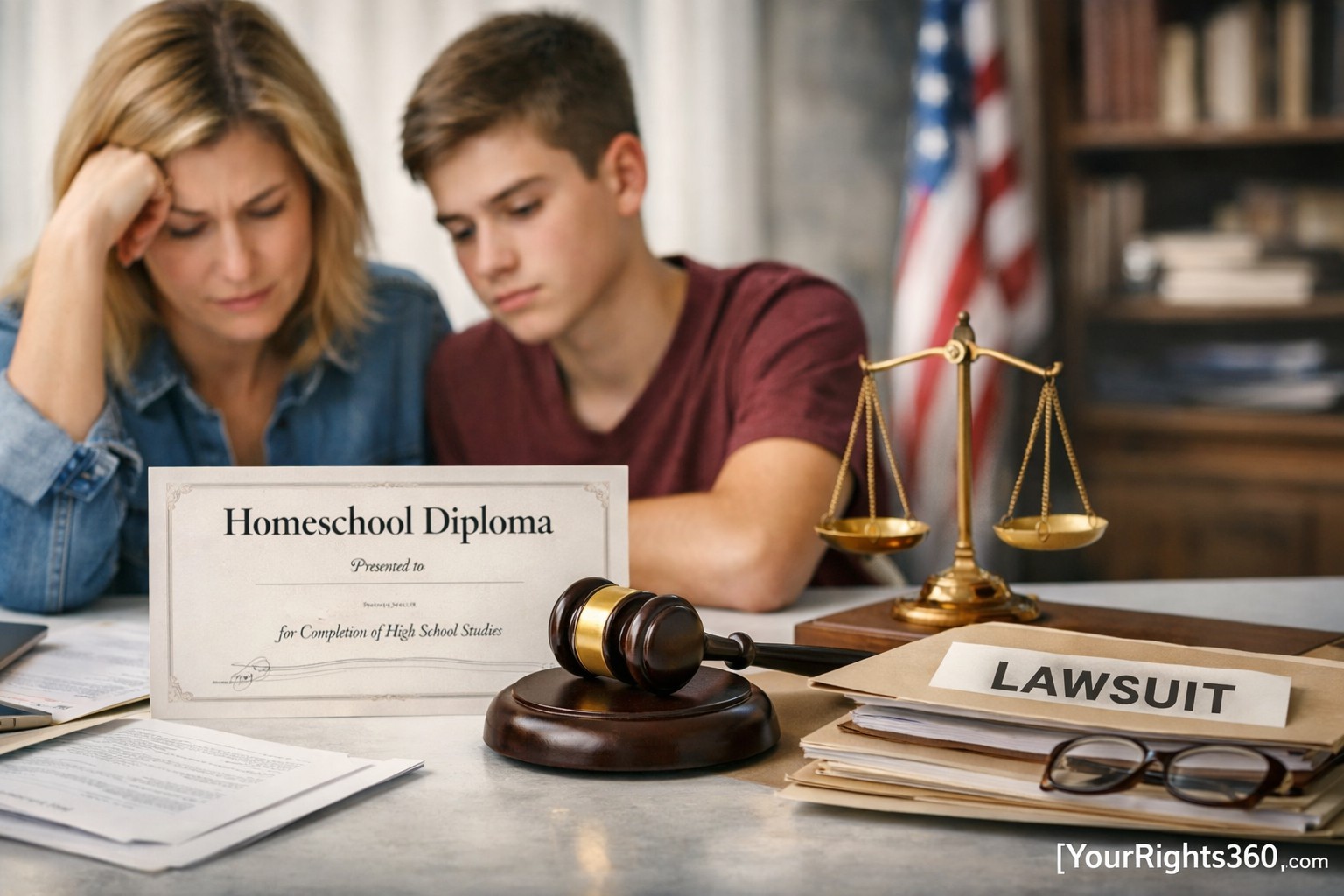
Once a student finishes high school level studies, parents can issue a homeschool diploma.
State law accepts that diploma as proof of graduation.
Students do not need to attend public school at any stage. Districts also do not control homeschool graduation decisions as long as legal steps are followed.
The system is simple when records stay complete.
Why homeschool diplomas still face resistance
Most conflicts come from lack of knowledge rather than bad intent.
Some school workers have never handled homeschool files before. College staff may follow policies written only for public schools. Employers may rely on automated background systems that expect state-issued diplomas.
These gaps create repeated problems such as colleges requesting public school transcripts that do not exist, districts refusing to confirm homeschool completion, scholarship programs questioning graduation proof, and companies demanding documents beyond legal requirements.
Cases like George Kingsley Acquah and the Ghana School of Law show how education recognition disputes can turn into serious legal battles when institutions deny student rights.
Parents often send everything the law requires.
Denials still happen.
That moment turns routine paperwork into a legal issue.
How small denials grow into formal complaints

Families usually start calmly. They email records. They explain homeschool law. They ask for written answers.
- Days pass.
- Then weeks.
- College deadlines expire.
- Scholarship offers vanish.
- Job chances disappear.
Only after real harm occurs do many families seek legal support.
Some disputes end when attorneys send official letters. Others move into complaints or court cases.
Families who followed the homeschool process correctly almost always succeed.
They had all legal records but no response came for weeks.
After sending formal documents and legal references, the college reversed the decision and approved admission within days.
What judges focus on in homeschool diploma cases
Courts in Pennsylvania do not argue about teaching styles or curriculum choices. They check legal compliance. Judges review affidavits filed each year, evaluator reports, learning portfolios, and proof of graduation.
If families completed these steps properly, courts recognize the diploma as valid. When institutions demand extra paperwork not required by law, courts usually reject those demands.
This pattern has stayed steady for years. Homeschool diplomas carry legal authority when parents follow state rules.
Documentation mistakes that cause most disputes
Many homeschool families run strong programs but weaken their position through poor record habits. Common problems include missing yearly affidavits, late evaluator reviews, lost student work samples, and verbal confirmations without written proof.
Even one missing year can raise questions. Most difficult cases fail due to missing records, not weak homeschool laws.
Clear paperwork prevents nearly every serious conflict.
How organized families avoid trouble before it starts
Parents who homeschool long term treat education records as permanent legal files.
- They save each affidavit copy.
- They keep signed evaluator reports every year.
- They store student portfolios both online and on paper.
- They ask districts to confirm receipt of paperwork in writing.
- They issue graduation certificates with dates and signatures.
When questions arise, these families provide proof within minutes.
Most challenges end right there.
Smart steps after a diploma gets rejected
Written responses work better than emotional calls.
Parents should send formal letters with all records attached. They should reference Pennsylvania homeschool law clearly and ask for specific reasons behind the rejection.
If denial continues, homeschool legal groups often step in fast. Education attorneys can resolve many disputes through official notices alone.
Court action becomes necessary only when institutions refuse to respect legal standards.
Why conflicts increased after 2020

Homeschool enrollment rose sharply across the nation after 2020. Pennsylvania saw thousands of new families enter home education within a short time.
Large graduating classes followed soon after. Schools, colleges, and employers needed time to adjust policies and train staff.
The law stayed mostly the same. The number of homeschool diplomas grew quickly. That increase alone explains the rise in disputes and lawsuits.
Better acceptance across the state today
Progress continues.
Many Pennsylvania colleges now list homeschool admissions policies on their websites. Employers train HR teams on alternative education backgrounds. Military offices updated diploma recognition rules.
Some confusion still exists at local levels, but awareness improves each year.
More homeschool graduates gain acceptance without delays than ever before.
When legal help becomes necessary
Legal support makes sense when a denial causes serious harm. This includes loss of college admission, canceled scholarships, withdrawn job offers, or district refusal to process records.
Most attorneys resolve cases through formal letters rather than court.
Judges serve as backup when institutions refuse to correct errors.
The lesson behind nearly every homeschool lawsuit
Strong records win. Missing paperwork creates risk. Courts rely on proof, not opinions about education style. Families who document carefully almost always succeed.
What lies ahead for homeschool diploma disputes
Public understanding continues to grow. Schools update procedures. Colleges revise admissions rules. Parents become more organized.
Legal conflicts should slowly decrease. Some confusion will remain, but prepared families will stay protected.
Homeschool diplomas in Pennsylvania already hold legal recognition. Most disputes come from misunderstanding, not weak law. Clear documentation prevents most problems. Prompt written action solves many others.
Lawsuits exist as protection when rights get ignored, not as a routine step in homeschooling. Families who follow state rules carefully rarely need them.
Similar legal battles appear in digital safety cases as well, such as the Life360 Class Action Lawsuit 2026, where families challenged how their private data was handled.