
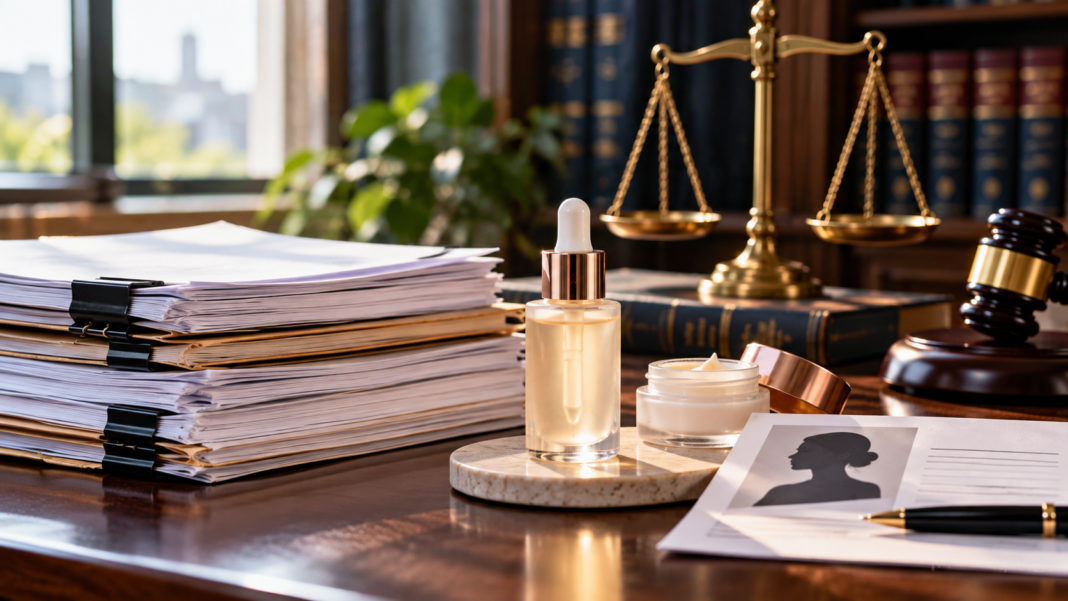


A search for an “Amway beauty right of publicity lawsuit” can bring together several different legal issues. Amway’s published rules address unauthorized commercial use of a person’s name or image. Separately, government and court records document disputes involving Amway’s beauty products, trademarks, marketing practices, and product warnings. Those records should not be treated as proof that a single lawsuit about a beauty advertisement and someone’s likeness exists.
As of October 28, 2026, the public records reviewed for this article do not establish a specific U.S. right-of-publicity case against Amway over an Amway Beauty advertisement. They do establish other proceedings, including a federal consumer-protection action and California Proposition 65 complaints involving named beauty products. Understanding the difference matters because the claims, possible remedies, and people affected are not the same.
The right of publicity issue
The right of publicity generally concerns commercial use of someone’s identity, such as their name, portrait, likeness, or voice. It is primarily a matter of state law in the United States, and the details vary across jurisdictions. The question is often whether a business used an identifiable person to promote a product without the authorization required under the applicable law. An ordinary photograph, a paid endorsement, and a news report may raise very different legal questions.
Amway itself addresses the issue in its published digital communications standards. Its guidance says an Amway Business Owner should not use another person’s publicity rights to promote a business without written permission. It also restricts posts featuring a celebrity or prominent third party without authorization or company approval. These are company conduct rules, not a court finding that Amway violated anyone’s rights.
The policy offers an example of an independent business owner reposting a photograph of a famous athlete with an XS energy drink and suggesting that athletes endorse the brand. Amway says this is not allowed without written authorization. That example explains the risk of an implied endorsement, but it is hypothetical policy guidance, not evidence of an actual lawsuit. See the published Amway conduct standards for the underlying wording.
The federal Amway marketing case
A separate, documented federal case involves Amway’s multilevel marketing business. On September 17, 2026, the Federal Trade Commission and the state of Washington filed an action against Amway Corp., World Wide Group LLC, and Leadership Team Development Inc. in the U.S. District Court for the Western District of Washington. The case is Federal Trade Commission et al. v. Amway Corp. et al., No. 2:26-cv-03474.
The agencies alleged unfair and deceptive recruitment and sales-related practices. The FTC announced a proposed settlement with $225 million in monetary relief, along with business-practice restrictions. The allegations relate to the multilevel marketing opportunity and consumer protection, not a claim that a particular person’s portrait was used without permission in an Amway Beauty advertisement.
The FTC case page lists a stipulated order dated October 15, 2026. Readers should distinguish the filing of a complaint, an announced settlement, and the operative court order. A complaint states allegations; it is not itself a judicial finding that every allegation is true. The FTC’s Amway case record is the appropriate starting point for current orders and redress updates.
Beauty products appear in other claims
Amway-related beauty litigation also appears in California’s Proposition 65 notice database. A notice filed November 8, 2024 identified Artistry Ideal Radiance CC Cream and alleged exposure involving diethanolamine. The California attorney general’s database lists a civil complaint filed March 19, 2025, in Alameda County Superior Court, under case number 25CV116018, naming Alticor Inc. and Amway Corp.
A separate notice identified Artistry Signature Select Brightening Mask and a related complaint, case number 25CV116027, also filed March 19, 2025. These are failure-to-warn allegations under California law. They do not concern an individual’s right to control use of their name or likeness. The existence of a notice or complaint alone does not establish liability, a product recall, or a final judgment.
Anyone researching these matters should inspect the California notice for the CC cream and the notice for the brightening mask. They identify the named products, parties, and allegations more precisely than a general search result about an “Amway beauty lawsuit.”
A trademark dispute is different again
Another federal court record concerns unauthorized use of Amway-related trademarks in online product sales. In Alticor, Inc. et al. v. Akaski Value Making, LLC et al., No. 1:24-cv-526, the Western District of Michigan considered allegations involving sales and trademark infringement. Its July 7, 2025 opinion discussed a request for default judgment and an injunction. Trademark rights protect brand identifiers and consumer recognition; publicity rights concern a person’s identity.
A shopper might see the words “beauty,” “Amway,” and “lawsuit” in both types of dispute. That overlap does not make the legal claims interchangeable. Trademark litigation may involve the authenticity or labeling of products, whereas a publicity claim asks whether a person’s identity was used commercially without sufficient permission.
How to check a claimed publicity case
A reliable lawsuit report should identify at least the plaintiff, defendant, court, case number, and specific conduct alleged. It should also make clear whether the claim appears in a filed complaint, a court order, a settlement, or an appeal. If an article only repeats “Amway Beauty lawsuit” without naming a person whose image was used, it may be describing another category of dispute.
A useful first question is who allegedly appeared in the advertisement. The second is where the commercial use occurred, since state publicity laws vary. Then check whether the person consented, what the advertisement actually communicated, and whether the image appeared in advertising rather than news or commentary. These details may affect a claim, but none should be assumed from a keyword alone.
For people whose image appears in commercial content, preserve the original post, its URL, screenshots with dates, and any written permission or licensing correspondence. A business owner should keep releases and avoid suggesting a celebrity endorses a product without authorization. A dispute may also involve false endorsement or advertising law, depending on the facts.
The key distinction for readers
There is a documented FTC consumer-protection proceeding involving Amway, documented California product-warning complaints naming Amway-related beauty products, and separate trademark litigation. Amway also publishes rules about the right of publicity. None of those facts, standing alone, verifies a specific Amway Beauty right-of-publicity lawsuit. Readers should avoid treating one legal category as another or reporting an unverified claim as a court decision.
This article provides general legal information, not advice about an individual claim. The governing law and available remedies depend on the jurisdiction and the actual evidence.