
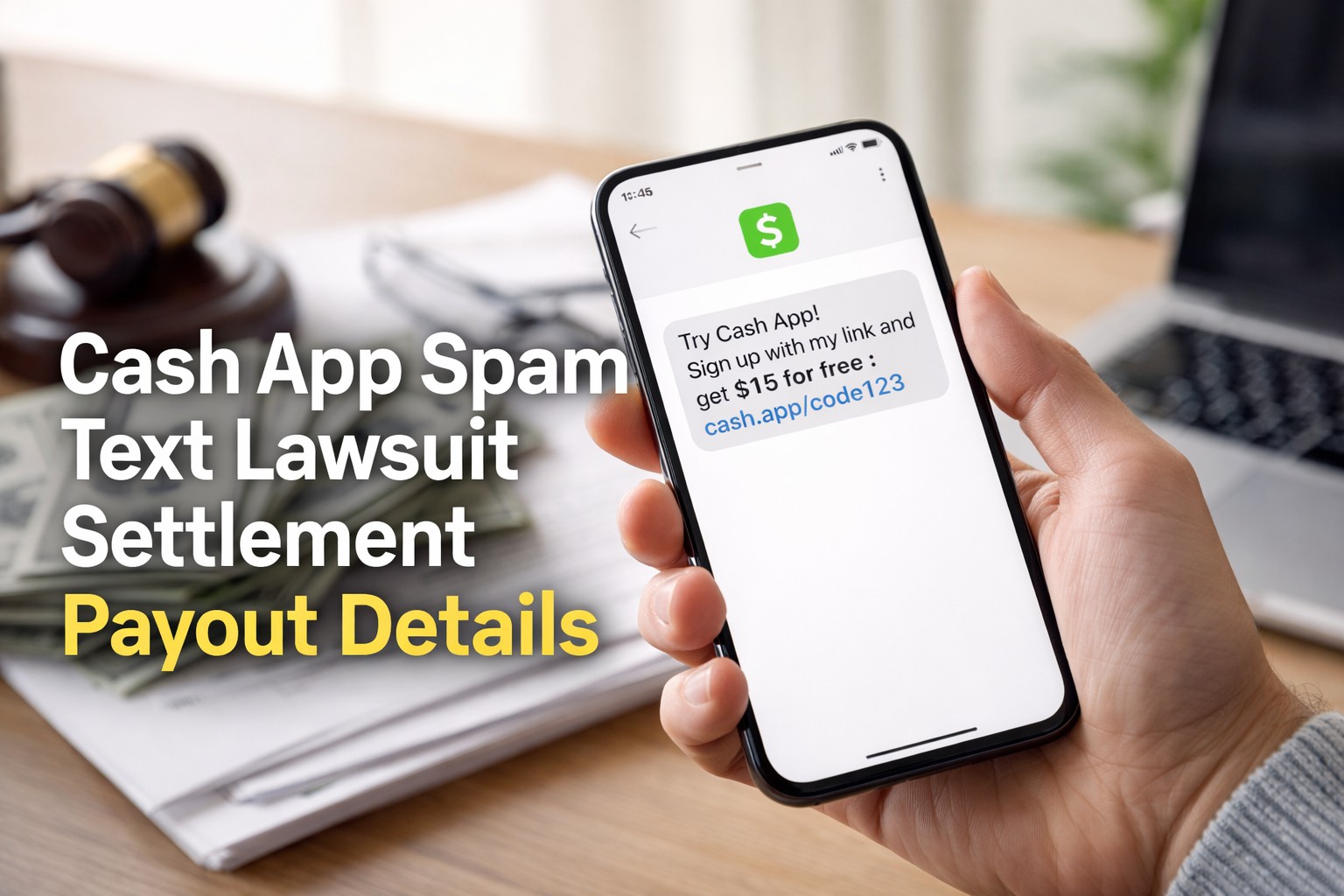


Cash App did not need to be hacked to create chaos. One ordinary-looking text was enough.
Users across the U.S. reported referral texts tied to Cash App that felt like a friend-to-friend invite. Many said they never agreed to receive them. The dispute led to a class action settlement connected to Cash App’s “Invite Friends” feature. Public reports describe a $12.5 million settlement fund tied to Washington State law.
Online searches often confuse this case with other Cash App matters about account security or support problems. Those are different cases with different deadlines.
Here is the key detail most people miss. This spam text settlement has been described as a Washington-focused referral text case tied to Cash App’s “Invite Friends” messages. Coverage says the eligible text period ran from November 14, 2019 to August 7, 2025. The claim deadline reported in major coverage was October 27, 2025, so most people cannot file new claims now. Reported payout estimates often fall around $88 to $147 per approved claim, but the final amount depends on claim volume and approval.
This post focuses on the referral text settlement only, not every Cash App complaint or scam report.
The first thing readers must know before they waste time
This spam text settlement did not apply to every Cash App user in the United States. Reputable reporting described it as a settlement aimed at Washington residents who received unsolicited Cash App referral texts during a specific time period.
That matters because many people outside Washington also received similar texts. A person in California or Florida can still feel wronged. That does not mean they fit the class definition used in this settlement.
So your article should be honest about scope. This honesty builds trust, and it also protects readers from scam pages that claim “everyone qualifies.”
What the lawsuit focused on
The case centered on texts tied to Cash App’s referral system. News and settlement summaries described messages linked to the “Invite Friends” program, where users could invite contacts to join Cash App. Recipients said they did not consent to receive those messages.
Public coverage also pointed to Washington statutes as the core legal hook. Two laws show up again and again in reporting:
Washington’s Commercial Electronic Mail Act (CEMA) and the Consumer Protection Act (CPA).
Another detail helps your readers understand the tone of these cases. Settlements like this often include no admission of wrongdoing. That does not make the case meaningless. Companies still pay money, cover legal fees, and often adjust practices after a public dispute.
Why referral texts cause legal trouble so fast
Referral tools look harmless on the surface. A user taps “Invite Friends,” selects contacts, and sends an invite. The recipient sees a text that looks personal, even if it came from a system prompt.
This is where consent turns messy. The recipient never asked for that contact. The sender may not think about consent at all. The law still may treat it as unlawful commercial messaging, based on state rules and how the system works. Reports tied the case to Washington’s CEMA and CPA for that reason.
A strong guide does not shame users who clicked. It explains why the setup creates risk, then tells people how to protect themselves next time.
The time window that kept showing up in settlement coverage
Readers often ask one simple question: “Did my text fall inside the case?”
Investopedia and other outlets described the eligible message period as November 14, 2019 through August 7, 2025.
Most people do not save old texts. That is normal. You can still do a simple check.
Look at your message history and search these terms: “Cash App”, “invite”, “referral”, “bonus”, or “$5”.
If you find a match, note the date and the phone number that sent it.
If the text came with a link, do not click it again. Take a screenshot instead.
Screenshots help if you need to report a scam or confirm details later.
That detail helps people sort memory from rumor. Someone may remember a referral text in 2018. That sits outside the window described in coverage. Another person may recall a text in late 2025. That also may fall outside.
Your article should state the window in plain words, then explain why it matters. That alone makes your post more useful than most “settlement update” pages.
Latest payout range and what it really meant
Many headlines repeated the same payout range: about $88 to $147.
Readers often treat that as a guaranteed check. That is not how class action payouts work.
In a settlement like this, the final amount can change based on how many people file valid claims and how the settlement administrator approves them. If far more people file than expected, each payment can trend lower. If fewer people file, payments can trend higher. Administrative costs also exist, even in well-run settlements.
So the best way to explain the payout is simple: the range provides a reasonable expectation based on reported estimates, not a promise for every person who saw a Cash App-style message.
Payment methods also differ case to case. Many class actions offer direct deposit, paper checks, or prepaid cards. The exact method depends on what the administrator offered and what the claimant selected during the claim process.
If you follow settlement payouts, you may also want to read our guide on the Credit One Bank lawsuit settlement and how claim payments work in another major consumer case.
When people usually get paid in a case like this
Many readers ask one question. When will payments arrive?
Class action payments usually go out after the court finishes final steps and the administrator completes claim checks. That process can take weeks or months. Some people get paid sooner than others, based on payment method and claim review.
If you filed a claim on time, check the official settlement page or posted notices to see if payments have started. Do not trust random “payment date” posts on social media. Most reliable updates come from the settlement administrator or court notices.
The claim deadline and the problem people face now
The spam text settlement claim deadline most often cited in coverage was October 27, 2025.
That date has passed. People who filed on time should watch the official settlement updates for payment notices.
Some reputable outlets later reported that the claim deadline had already closed.
This is the part many blogs avoid because it kills clicks. Your post should not hide it. It should state it early, then explain what a reader can still do today.
People who filed on time may still wait for payment or final processing steps, depending on the schedule the court approved. People who did not file on time usually cannot file late unless the court allows late claims. Courts rarely reopen claim windows.
A reader who sees a “new deadline” on a random site should treat it as suspect until an official notice confirms it.
Always confirm deadlines and payout updates on an official settlement page or a trusted news source. Scammers often copy the case name and invent new dates. One wrong click can cost more than any settlement payment.
Who likely qualified based on public settlement summaries
A clear description helps readers decide fast.
Reputable reporting described eligible people as Washington State residents who received unsolicited Cash App referral texts during the covered time period and who filed a claim before the deadline.
That state focus is important. It does not mean no one else received texts. It means this settlement class, as described in coverage, did not treat the entire U.S. as the same group.
If your reader lives outside Washington, your article can still help them. They can learn how to report spam texts, how to reduce scam risk, and how to spot other settlements tied to different claims.
Do not confuse this case with other Cash App settlements
A lot of readers search “Cash App settlement” and land on the wrong thing.
The Cash App Security Settlement has its own official site and its own posted deadline language. That site states the claim deadline for that case was November 18, 2024 and it says late claims are not accepted.
Cash App also has a separate page about a CFPB settlement with contact details and support routes. That is not the same as the referral text settlement.
This distinction protects readers from scam pages that mash multiple cases into one story.
The scam angle that shows up after every big settlement
Any time “payout” and “deadline” appear in the news, scammers move fast.
A fake settlement message tends to follow the same pattern. It creates urgency. It promises quick money. It pushes a link. Then it asks for personal details or payment “to release funds.”
A legitimate settlement process does not ask for your Cash App PIN. It does not ask for your bank password. It does not require a fee to get paid. If a text claims those things, it is not a real settlement update.
Cash App also publishes scam avoidance advice that fits well in a consumer guide.
A simple safety habit works better than long checklists. Open your browser and type the official site address yourself. Do not tap links inside surprise texts.
If someone clicked a link from a Cash App-style text
Many readers want practical steps, not legal talk. These steps can help after a bad click.
First, the person should secure the email account tied to Cash App. Email access often controls password resets. Next, change the Cash App password. After that, review recent activity and linked items inside the account. New devices or new linked cards can appear after a scam.
The person should also save proof. Screenshots help. The sender number matters. The link preview matters. If money moved, fast action with a bank or card issuer can matter, since many dispute rules depend on speed.
If the person needs support, they should use official Cash App channels, not random phone numbers in texts or social posts. Cash App lists official contact routes on its help pages.
People ask about TCPA, so explain it without overreaching
Many spam text lawsuits involve the TCPA. That law can apply to certain unwanted marketing texts and calls that rely on auto-dial systems or lack consent. Some cases use TCPA damages as the main leverage.
Public coverage of this specific Cash App spam text settlement tied the claims to Washington laws, such as CEMA and the Washington Consumer Protection Act.
So the clean message to readers is this: TCPA often appears in spam text cases, but this settlement has been described in reporting as a Washington-law case tied to referral texts. A reader should not assume every spam text settlement follows the same legal path.
What “consent” looks like in real life
Consent sounds simple until you see how people use apps and contact lists.
A person can get a referral text even if they never used Cash App. A friend can send invites from inside the app without the recipient’s request. A recipient can reply “STOP” and still get another invite later, depending on how the system and sender behave. Old phone lists also create risk, since contacts change hands and numbers get reassigned.
These details explain why courts and settlement teams spend so much time on consent. Consent decides liability in many messaging cases. That is also why readers should take spam texts seriously even when the message looks casual.
What readers can do now if they missed the spam text claim deadline
People hate this answer, but it helps them avoid false hope.
If a reader missed the October 27, 2025 deadline reported in major coverage, they most likely cannot file a new claim for this settlement today.
That does not mean the reader should ignore the problem.
If the reader still gets referral spam texts, they can report them to their mobile carrier and block the sender. If a scam caused money loss or exposed personal details, they can report it through consumer channels and document everything. If the issue involves account access, data exposure, or support failures, they should check the separate Cash App Security Settlement site to see if it matches their situation and deadlines.
This approach keeps your article helpful even after a deadline passes.
Use the official settlement site and trusted news sources to confirm dates and payment updates.
This article shares public settlement information. It does not offer legal advice. A licensed attorney can review your situation if you lost money or face ongoing fraud risk.