
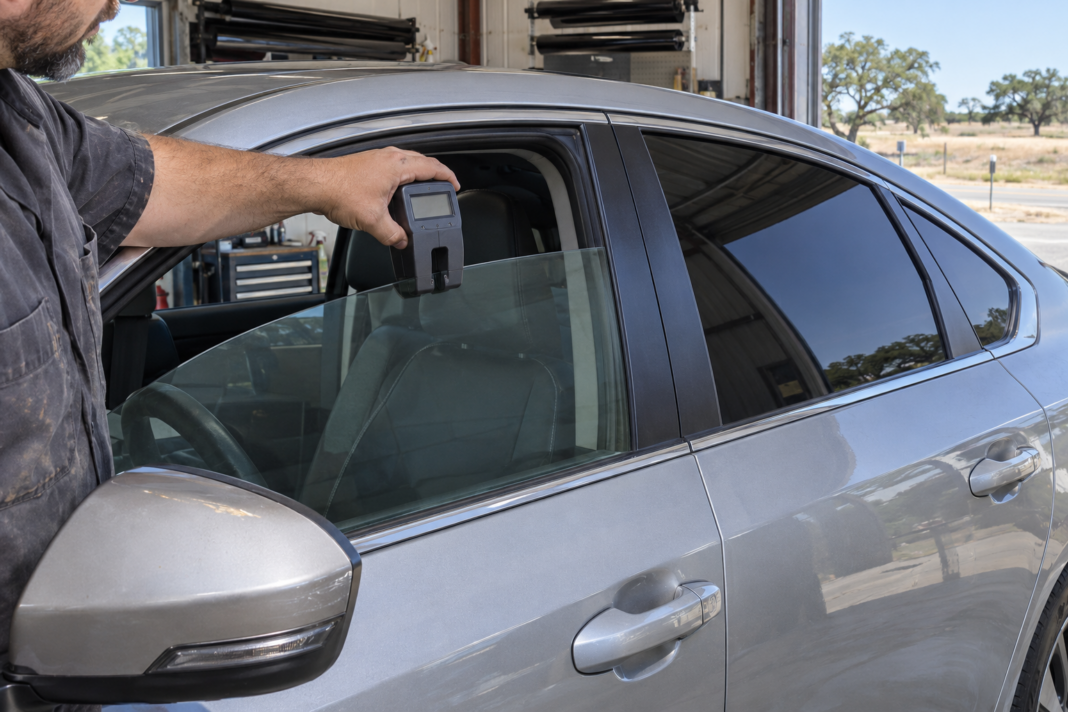


Texas lets you tint the windows next to the driver as long as the finished glass lets through at least 25% of visible light and reflects no more than 25%. A roll marked “25%” can still leave your front windows too dark once the film goes over glass that already blocks light.
Start with the window you want to tint. Texas treats the windshield, the rear doors and the back glass differently. If you want dark tint on the back glass, check your outside mirrors before you book the job.
Match the Tint to Each Window
| Window | Texas rule for aftermarket tint |
|---|---|
| Driver and front passenger windows | At least 25% light transmission and no more than 25% reflectance through the glass and film together. |
| Rear side windows | No minimum light transmission under the Texas tint rules. |
| Back glass | No minimum if both outside mirrors give the driver a view at least 200 feet behind the vehicle. Without qualifying mirrors, the area used for rear visibility needs at least 25% transmission and no more than 25% reflectance. |
| Windshield | Keep dark film within the permitted top strip. That strip needs at least 25% transmission and no more than 25% reflectance. Red, blue and amber film are prohibited there. |
Section 547.613 of the Texas Transportation Code limits the windshield strip to the AS-1 line or five inches from the top, whichever is closer to the top. If there is no AS-1 mark, measure five inches down from the top. Texas DPS also allows clear, untinted UV film on the windshield without a medical exception. If a shop offers a light shade across the windshield, ask whether the product is actually untinted.
Ask What the Meter Will Read
Visible light transmission, or VLT, is the share of light that passes through the window. Lower VLT means darker glass. A film labeled 35% on glass that already transmits 70% of light would yield roughly 24.5% in a simple estimate. That would put the front side window below the 25% standard. Ask for a meter reading of the finished window because the calculation only gives you a rough idea.
If you just bought a used car, test both front side windows before adding film. A dark rear door and a dark back window can look alike from the curb, but the mirror condition applies to the back glass. Check that you can actually see the road behind you through each outside mirror, especially if one is damaged or missing.
Tint rules vary across state lines. If you plan to register the car in Virginia after a move, check Virginia’s front and rear window tint limits before you choose film.
Keep Medical Proof in the Car
Texas allows qualifying medical exceptions for people who need protection from sunlight or bright artificial light. If you need darker front side windows, get a signed statement from a licensed physician or optometrist. It should identify the driver or occupant and state that the tint is medically necessary to protect that person’s health.
DPS stopped issuing its own tint exemption certificates in 2019. Keep the signed statement in the vehicle and show it if an officer asks during a traffic stop. A medical exception does not authorize dark film across the windshield’s main viewing area. Check the Texas DPS tint and medical exception rules before the installer applies anything to the windshield.
Check the Label Before You Leave
Texas DPS calls for one compliance label at the bottom rear corner of the driver’s side window. Ask the installer to show you the label and the meter readings before you pay. If you bought the car with tint already installed, have a shop measure it and confirm what would need to come off if either front window reads below the limit.
Texas ended annual safety inspections for noncommercial vehicles on January 1, 2025. Vehicles subject to emissions testing still have to meet that separate requirement. Even without an annual safety inspection, the window tint law still applies on the road. See the current Texas DPS inspection requirements if you need to check which test your vehicle needs.