
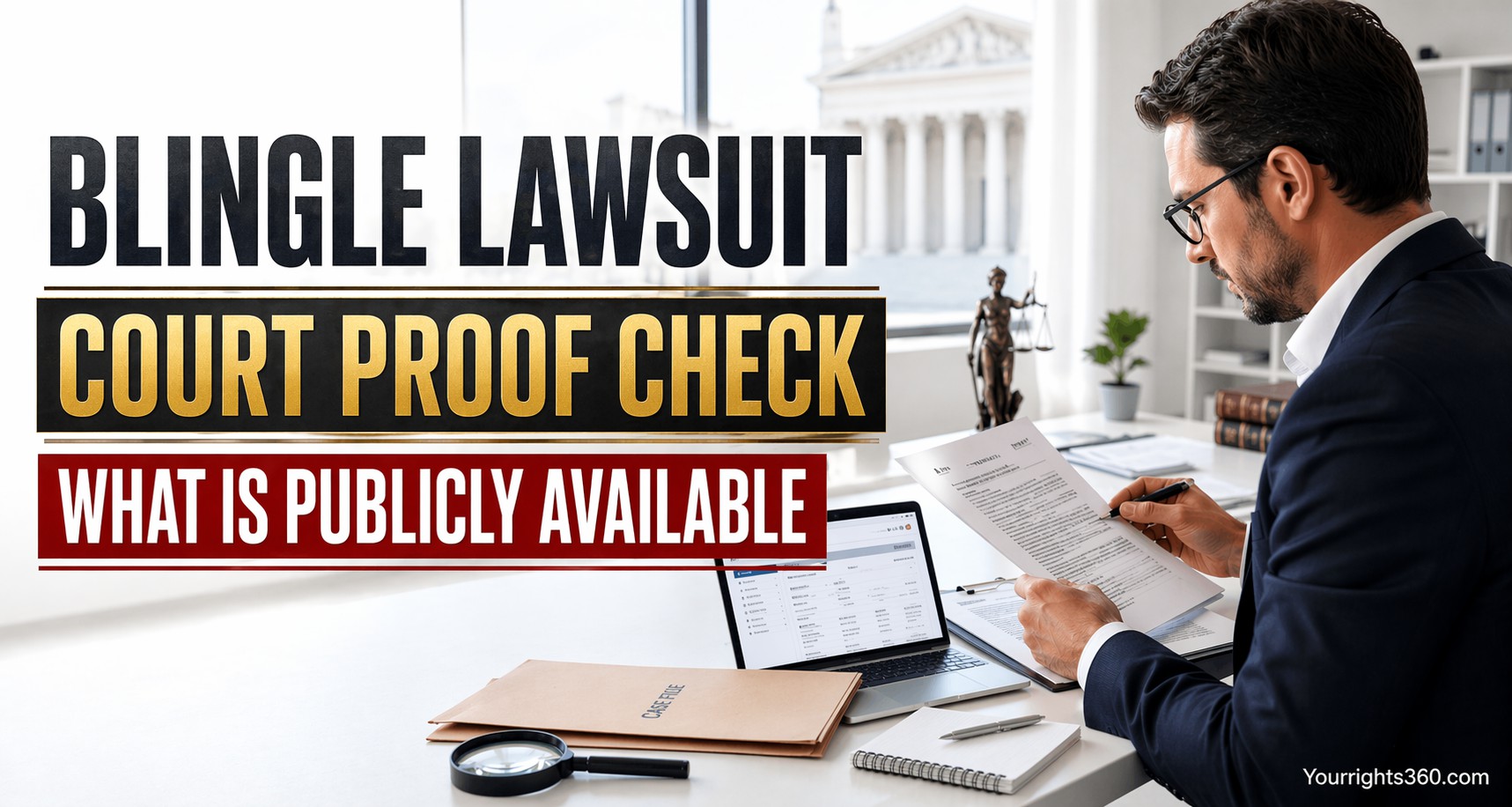
This topic needs clean facts. The first step stays simple. Check if a real court case exists behind Blinglelawsuit, or if the word spreads because of rumors and recycled claims. Court records answer that question better than any headline or social post. A real lawsuit leaves details you can verify in minutes. You do not need opinions, screenshots, or dramatic summaries. You need four items that courts use to track a case. You need the case name, the court, the case number, and a public docket entry. These details tell you that a filing exists and where it sits in the system.
Once you have those basics, the rest becomes easier to judge. You can spot pages that only chase clicks. You can ignore content that avoids real identifiers. You can focus on what matters, such as dates, court location, and what happened next in the record.
Proof Snapshot You Can Verify Fast
Case name: Waldron et al v. SVHB Marketing LLC d/b/a Horse Power Brands et al
Court: U.S. District Court for the Eastern District of Pennsylvania
Case number: 2:23-cv-03485
Filed date: September 7, 2023
Key point: Public commentary often links the outcome to a mediation step issue in the franchise agreements.
That set of details matters more than any headline. It settles the main question right away. A real federal filing exists, and the keyword did not start as pure internet noise.
Verify This Case in Two Minutes
Use the case number first. Search the case number and confirm the court name matches. Then match the filing date and the case caption. If two trusted places show the same details, you can trust the case record is real. Skip pages that avoid the case number. Skip pages that do not name the court. A real case page does not hide these basics.
Want to see the same proof-check method used on another real legal topic. Read our Innovasis Lawsuit Innovasis DOJ Investigation and Innovasis Settlement Full Legal Guide next.
What proof looks like on a page
Plenty of content uses the word “lawsuit” as a hook. Proof looks different. Proof shows identifiers early, and it shows them clearly. A reliable page usually gives you the full case caption and the case number without forcing you to hunt. It names the court. It shows a filing date. Many dockets also show the district and sometimes the judge name.
These identifiers let you cross-check. If two separate sources show the same caption and the same case number, the record is real. If a page talks big but never shows the caption or the number, treat it as commentary. It might be useful context. It does not verify anything. Blog posts and social posts fit in the same bucket. They can explain, claim, warn, or complain. They cannot confirm a court filing on their own. Court proof always comes back to identifiers you can match.
What Readers Confuse Most About Public Records
Public does not always mean free. A docket can be visible, but the full documents can still sit behind official access. This is common in federal cases. You can confirm a case exists, yet you may not open every file without extra steps. This gap causes a wrong conclusion. People assume the case is fake because they cannot open the PDFs. The better conclusion is simpler. The free view can stay limited.
The public problem that confuses readers
A lot of people hear “public record” and assume they can open everything for free. Federal court records do not work like that. A public docket often shows the basics, such as the caption, court, and filing date. It might show a list of entries too. The actual PDF filings and newer updates can sit behind official access and fees. Docket mirrors can also lag behind.
So this situation happens all the time. A reader confirms the case exists, then hits a wall when they try to read every document. That does not make the case fake. It usually means the free view is limited. If you want the deeper documents, you may need official access, a lawyer who has access, or a trusted service that hosts the filings.
What the Court Can Decide Before It Reads the Big Claims
Courts often check contract rules early. These rules can decide if a case moves forward at all. This matters in franchise disputes. The agreement can require steps before a lawsuit can continue. That is why a filing does not guarantee a long trial. A case can end early if one party skips a required step.
What changed after the filing
A case filing does not promise a long courtroom fight. Franchise disputes often turn on contract rules first. Courts often look at the agreement steps before they review the loudest allegations. This point matters with Blinglelawsuit because commentary about this case describes an early end point. The court ended the case at the summary judgment stage because the plaintiffs did not complete a required mediation step found in the franchise agreements. Writers who discuss the outcome often cite March 20, 2024 in the Eastern District of Pennsylvania.
That result surprises people who expect a dramatic trial. It also teaches a practical lesson. A lawsuit can be real and still end fast if the contract requires a step before court.
Mediation clauses are not “fine print”
Franchise agreements often include dispute rules that act like gates. These rules can require notice steps. They can require mediation before court. Some agreements push disputes into arbitration after mediation. This matters because arbitration often stays private. The public record can look quiet even if the dispute continues. Courts also enforce these clauses more often than people expect. They can stop a case, pause it, or force a restart after the parties follow the required steps.
This is one reason readers feel stuck. They hear “lawsuit,” but they do not see endless filings online. The case can end early, shift into private dispute steps, or settle without public drama.
A simple way to separate facts from noise
This topic gets messy because different sources do different jobs. Mixing them together creates confusion. A docket confirms a case exists and shows the official basics. Reporting explains claims and context. Social posts show opinions and personal stories. They do not confirm a filing. If you keep those lanes separate, your article stays honest. Readers also trust you more, because you do not treat a headline like a court record.
The keyword trap that pulls people into bad pages
Blinglelawsuit attracts a familiar kind of page. Some sites rank mainly because the domain name matches the keyword. The site can look “official” at a glance, yet it never shows a case number near the top. It might also publish unrelated topics such as lifestyle, travel, tech, or random guides that have nothing to do with the dispute.
That pattern creates risk. Readers assume a top result must be reliable. It is not. A lawsuit-style domain does not equal authority. A high rank does not equal authority either. If a page cannot show court identifiers, it does not deserve trust on a legal topic.
Why Some Blinglelawsuit Pages Feel Official But Are Not
Some pages look official because the domain name matches the keyword. The design can look clean too. This can fool readers. A real legal source shows court details early. A traffic page often avoids court identifiers and fills space with general topics. Treat any page as non-official until it shows the case caption, court name, case number, and filing date. These details matter more than rank position.
A quick screen you can do in under a minute
You do not need legal training to spot weak pages. Use a short screen and move on. A reliable page shows the court and the case number near the top. It shows the district and filing date. It makes verification easy. A risky page avoids these basics. It leans on dramatic words like “confirmed” or “exposed.” It pushes screenshots as proof. It might mix unrelated content on the same site. If you see that pattern, slow down. Treat it as commentary at best.
Red Flags That Mean You Should Not Trust the Page
- The page does not show a case number near the top.
- The page never names the court or the district.
- The page claims “confirmed” but shows no court identifiers.
- The site posts unrelated topics and uses the lawsuit keyword as a hook.
- The page pushes screenshots as proof and skips docket details.
If you plan to buy a franchise, shift your focus
A lot of readers land on this keyword due to one reason. They think about buying a franchise. In that situation, headlines do not protect you. Contract terms protect you. Disclosures protect you. The practical step is to review the franchise disclosure and the franchise agreement with a qualified franchise attorney.
A smart review looks at litigation history disclosures, termination rules, dispute steps such as mediation and arbitration, fee structure, and what the territory language actually guarantees. This is where real risk lives. Many buyers get stuck on the word “lawsuit” and miss the clauses that control cost, exit rights, and how disputes must happen.
Need a second example where verified records matter more than online talk. Read What the usaa safepilot patent lawsuit means for policyholders and see how the proof trail works in a different case.
What to Do Next If You Are a Buyer or a Current Franchisee
If you plan to buy
Ask a franchise attorney to review the disclosure and the agreement before you sign. Focus on dispute rules, termination terms, fees, and what the territory language promises in writing. Use the lawsuit topic as a risk signal, not as your only decision factor.
If you already own the franchise
Read your dispute section again before you take any legal step. Check if the agreement requires notice or mediation first. Save emails, invoices, and support requests. Keep a clean timeline of events with dates.
If you are only a reader
Stick to court identifiers and avoid rumor pages. Use the case number and court name to verify what you read. Treat dramatic posts as opinion until you see proof.
What you can say without stretching the truth
A federal case exists that people connect to the Blinglelawsuit keyword, and the public docket shows the court, the case number, and the filing date. Commentary about the dispute describes an outcome tied to a mediation prerequisite in the franchise agreements, and writers often reference March 20, 2024 in the Eastern District of Pennsylvania when they discuss that result. Some high-ranking pages under this keyword do not act like reliable legal resources unless they provide court identifiers that readers can verify.
That set of statements stays fair. It also keeps your site safe. You avoid overclaims, and you give readers a real way to verify what they read.
One practical note for YourRights360 readers
Google can reward a matching domain name and click behavior. That does not make a page official. Legal reliability comes from court identifiers and careful language. Your best move is simple. Put the docket identifiers up front. Explain what they mean in plain English. Call out the red flags that show a page hides court details. That approach keeps readers calm, cuts confusion, and builds trust without drama.
Frequently Asked Questions (FAQs)
Is Blinglelawsuit a real court case or just an online rumor
A federal case record exists that people connect to this topic. The safest way to confirm reality is to match the case caption, court, case number, and filing date on a docket record. Pages that skip these identifiers often push rumor, not proof.
What case details should appear on a trustworthy Blinglelawsuit page
A reliable page shows the case name, the court, the case number, and the filing date near the top. These identifiers let you verify the same case across more than one trusted docket source.
Why do some websites rank for Blinglelawsuit without showing court proof
Some sites rank due to keyword domain match and click behavior. Ranking does not prove authority. Treat any page as non-official until it shows court identifiers that you can verify.
Why can I see a docket but not the full documents
Federal court systems can show the case basics in public, but full PDF filings and newer updates may require official access or fees. A limited view does not mean the case is fake. It often means the free record is summary level.
What happened after the case was filed
Public commentary often describes an outcome tied to a mediation prerequisite in the franchise agreements. Writers commonly reference March 20, 2024 in the Eastern District of Pennsylvania when they discuss that result. This shows how contract steps can shape a case early.
Why does a mediation requirement matter in franchise disputes
Many franchise agreements require notice steps and mediation before court. Courts can enforce these terms. This can pause a case, end it early, or move the dispute into private processes such as arbitration, which can reduce what the public sees.
How can I verify Blinglelawsuit in a simple way
Search the case number first and confirm the court name matches. Then match the case caption and filing date. If these details match across more than one trusted docket listing, you can trust the court record is real.
What should franchise buyers check beyond lawsuit headlines
Buyers should review the franchise disclosure and the franchise agreement with a qualified franchise attorney. Focus on litigation history disclosures, termination rules, dispute steps such as mediation and arbitration, fee structure, and what territory language guarantees in writing.

Pingback: The Real Story Behind the Texas Built Construction Lawsuit Search
Thanks for pointing that out. A public court listing does show a case titled Kennola Solutions, LLC v. TBC Holdings Group, LLC d/b/a Texas Built Construction, with case number 471-00561-2024 and a filing date of January 30, 2024. That proves a dispute was filed in court, but it does not prove fault, fraud, or the final outcome. Readers should treat it as a docket record, not a verdict.