
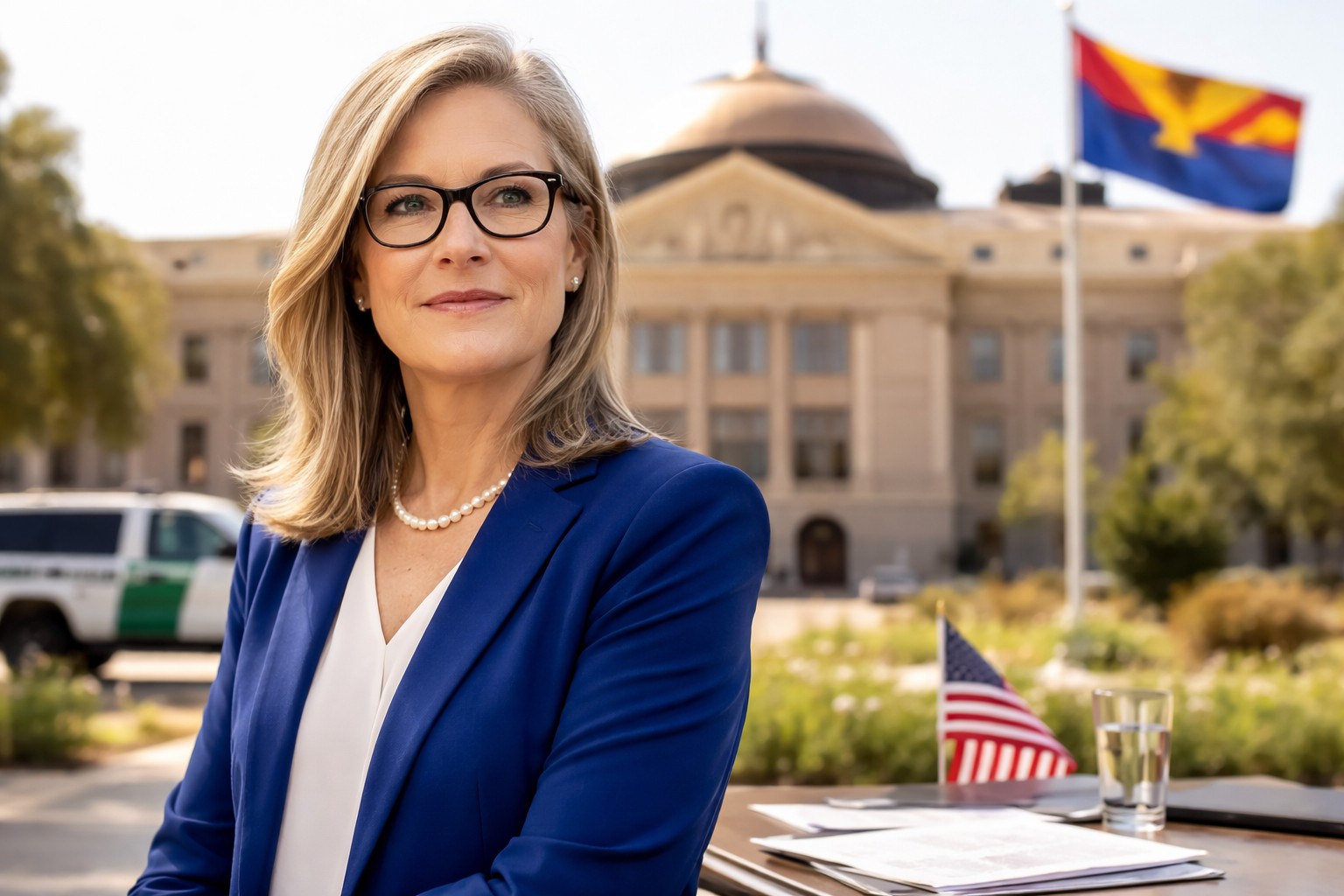


Politics in Arizona moves fast. Border security, water supply, and school funding often shape public debate.
Governor Katie Hobbs now sits at the center of many policy discussions. Voters across the state show mixed reactions. Some support her direction, while others question early decisions.
Many analysts also compare Arizona policies with those in California, since both states face pressure from population growth, housing demand, and environmental challenges.
Early career built outside traditional political circles
Katie Hobbs did not begin her career through corporate leadership or legal practice. Her professional work focused on community support and nonprofit services.
She worked with organizations that helped families facing domestic violence and unstable housing. These roles placed her close to social issues that affect many communities in Arizona.
Her entry into politics came in 2010. Voters elected her to the Arizona House of Representatives. That victory marked the start of a long period in state government.
Her public record includes several key positions:
- Member of the Arizona House of Representatives (2011-2013)
- Arizona State Senator (2013-2019)
- Arizona Secretary of State (2019-2023)
The position of Secretary of State placed Hobbs in charge of election administration across Arizona. The office oversees voter registration systems, ballot certification, and election procedures.
Arizona gained national attention during the 2020 presidential election. Election officials supervised vote counts, certification procedures, and recount reviews.
Supporters said the election process functioned according to state law. Critics questioned certain procedures and raised concerns about oversight. Public debate over these issues continued for several years.
The 2022 election placed Hobbs in the national spotlight
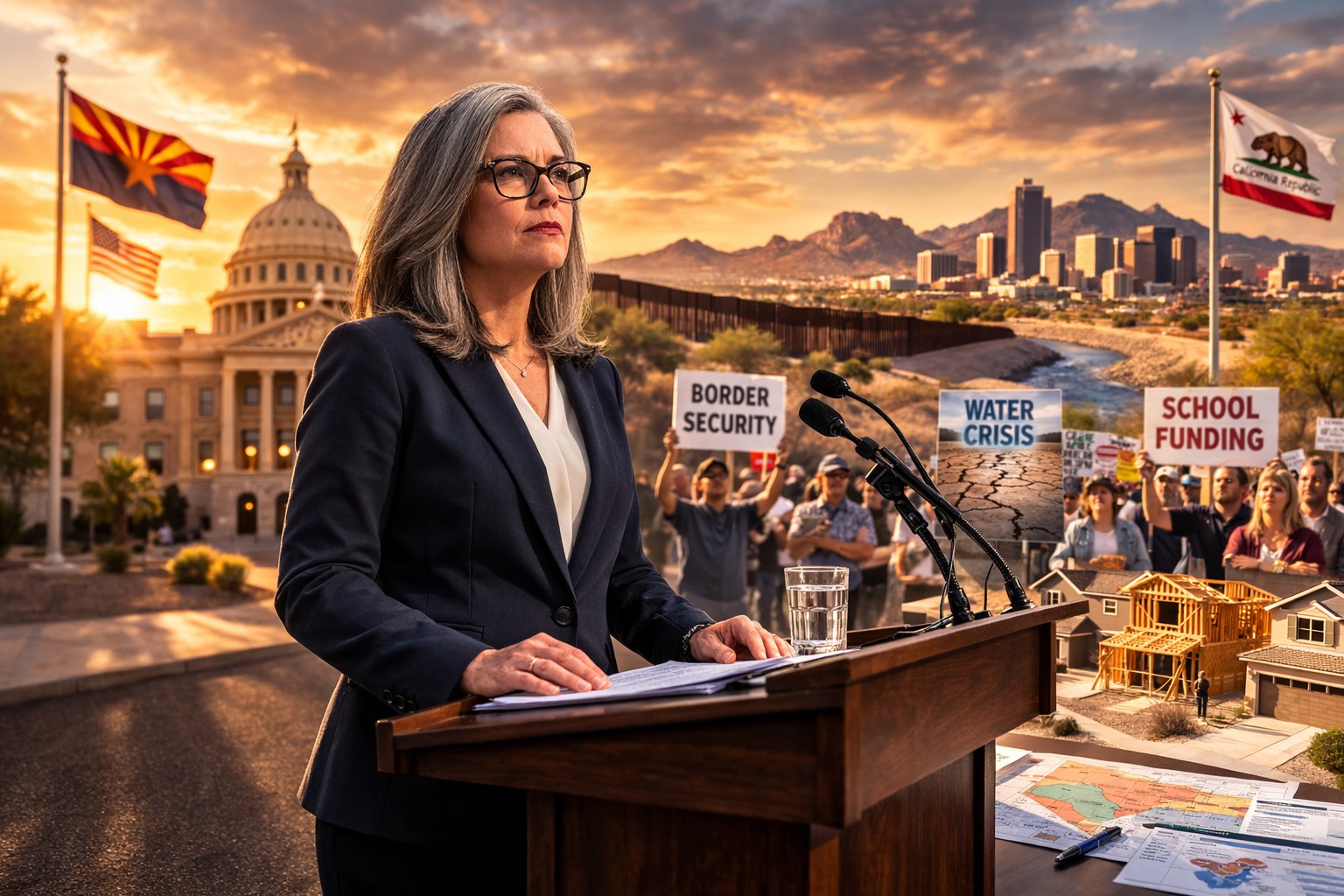
The 2022 governor’s race drew strong national attention. Hobbs faced Republican candidate Kari Lake in a closely watched contest.
Election officials completed recount checks and legal reviews after the vote count. The state confirmed Hobbs as the winner after those procedures.
Her term as governor began on January 2, 2023.
The new administration entered office during a period of intense debate over border policy, water security, and education funding.
Water supply limits begin to shape housing decisions
Water availability remains one of the most serious long-term challenges in Arizona. Large parts of the state rely on the Colorado River system.
Federal research shows declining water levels in the river basin after years of drought and climate pressure.
Population growth increases the strain on these resources. Cities in the Phoenix region continue to expand. Housing demand rises as more people move to the area.
State regulators introduced a major policy shift in June 2023. Officials stopped approval of certain housing developments that depend heavily on groundwater in parts of the Phoenix metropolitan region.
State agencies explained that groundwater reserves cannot support unlimited construction.
Supporters said the decision protects long-term water access for residents. Critics warned that restrictions could slow development and raise home prices.
Business groups raised several concerns:
- fewer housing projects across fast-growth areas
- higher real estate prices
- slower economic expansion in local communities
Water policy often requires difficult choices. State leaders must balance development with long-term resource protection.
Border security remains a central political issue
Arizona shares more than 370 miles of international border with Mexico. Immigration and border security therefore remain constant subjects in state politics.
Governor Hobbs took office during strong national debate about migration and enforcement policy.
Her administration introduced several steps related to border management:
- requests for additional federal assistance
- cooperation with border communities and local officials
- adjustments to certain enforcement strategies used by the previous administration
One decision produced strong public reaction. State officials removed shipping containers that had been placed along portions of the border before Hobbs entered office.
Officials argued that the containers created environmental concerns and legal disputes with federal agencies.
Opponents claimed that the removal weakened physical border barriers.
Supporters argued that border security works best through cooperation with federal authorities rather than temporary state barriers.
Border policy remains one of the most politically sensitive issues in Arizona.
Legal challenges often require professional guidance. Readers who want to understand how law firms handle complex legal disputes can review this guide on Harrian Law Firm and its legal practice areas.
Divided government creates difficult budget talks
Arizona government operates under divided political control. Republicans hold the majority in the state legislature. Hobbs leads the executive branch as a Democrat.
This structure often produces complex budget negotiations.
The governor’s office proposed spending priorities that include:
- stronger investment in public education
- housing support programs
- water infrastructure improvements
- broader healthcare access
Legislative leaders often challenge the cost or direction of these proposals. Budget discussions sometimes continue over many weeks.
A major dispute appeared in 2023 during debate over the cost of Arizona’s school voucher system. Budget analysts warned that program costs exceeded earlier expectations.
Lawmakers reached a bipartisan agreement in May 2023 to resolve the immediate funding gap. The compromise addressed the short-term issue but left broader disagreements over education spending.
Budget negotiations often generate the most visible political conflict in state government.
School choice debate divides voters and lawmakers
Education policy sits at the center of Arizona politics. One major issue involves Empowerment Scholarship Accounts, a program that allows families to use public funds toward private education services.
Supporters argue that school choice gives parents greater control over education decisions.
Opponents say the program removes funding from traditional public schools.
Governor Hobbs proposed limits intended to slow expansion of the program. Legislative leaders rejected several of those proposals.
This disagreement reflects a larger national debate about education funding and school choice policy.
Public education remains one of the largest expenses in the Arizona state budget.
Comparisons with California appear often
Political analysts frequently compare Arizona policy with developments in California. Both states face similar pressures but follow different policy approaches.
Shared challenges include:
- strong population growth
- rising housing costs
- environmental pressure
- immigration policy debates
Policy responses differ between the two states.
California usually adopts stricter environmental rules and broader social programs. Arizona often favors lower taxes and lighter regulation.
Some critics claim that certain Arizona policies mirror earlier decisions in California. Others reject this view and highlight differences in legal structure and economic policy.
These comparisons often appear in political campaigns and media coverage.
Critics continue to challenge administration decisions
Every administration faces opposition. Governor Hobbs receives criticism from lawmakers, advocacy groups, and political opponents.
Common concerns raised by critics include:
- immigration enforcement strategy
- housing limits tied to groundwater policy
- negotiations with the Republican-controlled legislature
- use of executive authority in administrative actions
Some critics call for stronger border enforcement. Others warn that environmental rules could slow economic activity.
Legislative hearings and campaign debates often amplify these disagreements.
Supporters highlight long-term policy goals
Supporters of the governor emphasize several policy priorities.
They point to initiatives such as:
- proposals to increase education funding
- expansion of healthcare services
- programs aimed at housing affordability
- long-term water conservation plans
Supporters also note that divided government limits the speed of policy change. Major reforms require cooperation between the executive branch and the legislature.
Public opinion surveys show mixed reactions among Arizona voters.
Some residents support the administration’s direction. Others remain skeptical about several policy decisions.
State policy choices affect daily life
Political debate often focuses on party conflict. Real effects appear in everyday policy outcomes.
Education funding affects classroom resources and teacher salaries. Border policy influences law enforcement agencies and communities near the international boundary.
Water regulations shape housing construction and long-term development across the state.
State leadership therefore affects issues that residents experience in daily life.
Economic development, environmental protection, and public services often compete for priority in legislative decisions.
Political conflict often reflects those competing interests.
Legal disputes often arise when government policy affects taxes, consumer rights, or financial services. Some cases also appear in broader tax-related litigation, such as the Tax Rise Lawsuit that examines claims, consumer complaints, and legal rights connected to tax practices.
Key issues that may shape the next political cycle
Governor Hobbs remains early in her first term. Several policy areas will likely dominate Arizona politics in the coming years:
- border security and immigration enforcement
- housing supply and development policy
- education funding debates
- long-term water sustainability
- economic growth and job creation
Arizona voters often divide closely between political parties. Statewide elections frequently produce narrow results.
Debate over Arizona policy and comparisons with California will likely continue. Both states influence national discussions about growth, environment, and economic policy.
Public scrutiny and political criticism remain constant elements of Arizona’s political landscape.