
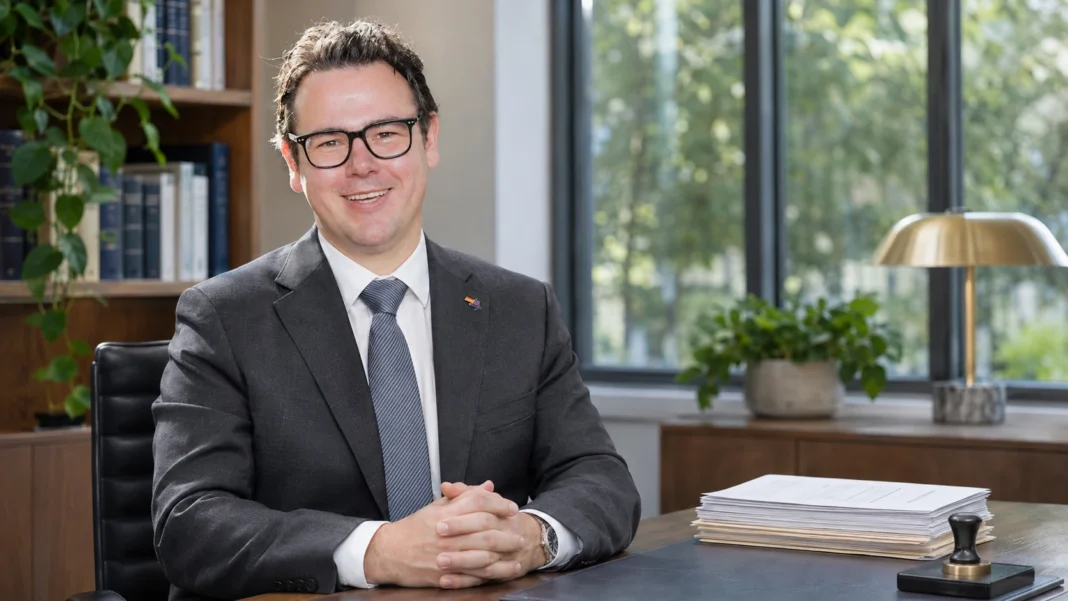


Fabian Hoffmann is a notary public at Boettcher Law in Australia. He can help with applications that need a signature witnessed, a copy certified, or other notarial work. If your documents will go overseas, you may also need an apostille after notarisation. Check the instructions from the office that will receive your application before you book, since that office decides which steps it requires. Send those instructions to the firm so it can tell you what to bring and whether you need any further certification. His surname is spelled Hoffmann, with two n’s, on his Boettcher Law profile.
Start With the Application Instructions
Read the form from start to finish. Look beyond the signature box. The last page or a separate email may tell you who must sign, what the notary must certify, and whether the finished document needs to go to another office. If you have only a brief instruction such as “have this notarised,” ask the organisation that requested it what it expects.
That small question can save a second appointment. A notary can certify a copy when the receiving office asks for one, but a certified copy may not satisfy a request to witness your signature. The reverse is also true. The Australian Government’s document legalisation advice tells applicants to confirm the receiving authority’s requirements before they prepare their papers.
Who Is the Notary?
Hoffmann is the principal of Boettcher Law. His professional profile says he works in English and German and holds notary public appointments in New South Wales and the Australian Capital Territory. The firm also lists legal work that crosses national borders. Those details may be useful if your application will go overseas, especially if it includes documents from Australia.
His qualifications do not tell you what your particular form needs. A bank, foreign government office, university, or company can set its own document rules. Give the firm those rules when you enquire. You will get a clearer answer than you would from a general request for a notary’s seal.
What Does the Form Ask Him to Do?
Hoffmann’s firm lists notary services such as certifying copies, checking identity, witnessing signatures, and administering oaths. The work depends on your form. A company director may need to sign in front of the notary, but a request for a notarised degree copy may require the notary to check the copy against the original. Send the firm the relevant instructions before your appointment so it can tell you what to bring.
What to Include in Your Enquiry
A short message with the right details will help Boettcher Law understand what your application needs. Include:
- The document: Say whether it is a form to sign, a certificate to copy, or another record.
- Its destination: Name the country and the office that will receive it.
- The instructions: Attach any email, form, or sample certificate that explains what the office requires.
- The people involved: Say how many people must sign and whether they can attend the appointment.
- The originals and deadline: Mention which original documents you have and when the completed application must arrive.
You can also ask what proof of identity to bring, what the service will cost, and how long it may take. The firm’s contact page has its enquiry details.
Should You Sign Before the Appointment?
If the application asks for a witnessed signature, check with the firm before you sign. You may need to sign in front of the notary after they check your identity. Bring the full form and its instructions, and ask whether you should fill in the other fields beforehand. If someone else must sign too, tell the firm when you book so it can explain who needs to attend.
Notarisation Is Not an Apostille
People often see both words on overseas application instructions. A notary may certify a document or witness a signature. An apostille is a separate certificate issued by Australia’s Department of Foreign Affairs and Trade, known as DFAT. It verifies an eligible signature, stamp, or seal on an Australian public document. DFAT can also issue an authentication certificate when that is the document required.
An overseas office might accept notarisation alone. Another may require the document to go to DFAT after the notary has finished. DFAT explains the difference in its guide to documents it can legalise. Ask the receiving office whether it wants an apostille or authentication certificate. DFAT says it cannot make that choice for you.
Check Whether a Copy Will Work
You may feel uneasy about sending an original certificate overseas. A notarised copy could be an option, but only if the receiving organisation accepts it. Ask that question before you pay for the copy or arrange an apostille. DFAT notes that its legalisation certificate is attached to the document you submit. If you want to keep an original free of extra marks, confirm that the receiving office accepts a legalised notarised copy.
Bring the original to a notary appointment if the firm asks for it. A photo on your phone or a scan may not be enough for the task. The firm can tell you what it must examine and what you will receive afterward. Keep the receiving office’s reply with your application records in case you need to check its instructions later.
Where Was the Document Issued?
An Australian document and a document issued overseas may follow different routes. DFAT says it legalises Australian public documents. If an application includes a certificate from another country, do not assume an Australian apostille is the right next step. Ask the receiving office what it wants for that certificate and check the rules of the country that issued it.
This is easy to miss when an application contains several records. You might have an Australian company form, a degree from another country, and a signed statement in one package. Treat each document as its own question. Tell the firm where each one came from and where the completed package will go. That gives everyone a better chance to spot a missing step before the deadline.
Leave Time After the Notary Visit
Your appointment may not be the final task. An application might still need DFAT legalisation, postage, or review by an overseas office. Give the firm the date the documents must arrive, not only the date you hope to send them. If the deadline is close, say so in your first message.
DFAT has a separate process for requesting document legalisation. The receiving office may also take time to review the application once it arrives. Neither the notary nor DFAT sets that office’s deadline. Plan around the full route instead of counting only the time needed for a signature or seal.
Do You Mean an Application to Become a Notary?
Notary public application can mean something else: an application to be appointed as a notary public. Hoffmann’s firm confirms that he holds separate appointments in NSW and the ACT. It does not publish his personal application paperwork, so there is no basis to describe the forms he submitted or how long his appointments took.
If you want to apply in NSW yourself, use the Legal Profession Admission Board’s guide for public notary applicants. It describes Form 1 and records that applicants must provide, including evidence of legal practice and completion of a prescribed notarial practice course. Check the board’s current requirements and dates before you lodge an application. The ACT has its own Notaries Public Act 1984, so an applicant there needs to follow the ACT process.
Common Questions
Can he notarise my application?
Hoffmann’s firm offers notary services and lists his appointments in NSW and the ACT. Whether he can complete your particular request depends on the document and its instructions. Send the firm the form or the receiving office’s written requirements so it can assess the work.
Is his seal enough for overseas use?
It may be. The overseas authority could also require an apostille or authentication certificate from DFAT. Ask that authority which steps it needs before you arrange them. A notary’s seal and a DFAT certificate serve different purposes.
What should I take to the appointment?
Ask the firm which originals, copies, identity documents, and instructions it needs. Tell it if anyone else must sign. If your signature must be witnessed, check before you sign the form at home.
How do I spell his name?
The spelling on Boettcher Law’s profile is Fabian Hoffmann. Use that spelling when you contact the firm or check its professional information.